
"Coffee Quality Institute"
2000 article(s) found

Introduction of Costa Rican boutique coffee Costa Rican coffee market Costa Rican coffee mouth
Coffee exports account for 25% of Costa Rica's total exports. Costa Rica has also benefited from the establishment of the Central American Institute for Agricultural Research (TurrialbaoftheCentralAmericanAgriculturalResearchlnstitute, referred to as IAAC) in Tarasu, which is an important international research centre. Costa Rica's coffee industry was originally owned by the Costa Rican coffee industry.

Comprehensive excavation of quality characteristics of Pu'er Coffee
In recent years, Yunnan Standardization Institute and Pu'er quality Supervision Bureau have comprehensively excavated the quality characteristics of Pu'er coffee. The relevant personnel visited the production, processing, testing, research and marketing departments and enterprises such as Pu'er entry-exit Inspection and Quarantine Bureau, Pu'er Tea Coffee Bureau, National Coffee key Laboratory, Yunnan Simao Beigui Coffee Co., Ltd., visit local senior coffee experts and hold seminars.

Panamanian Esmeralda Manor Coffee Flavor description treatment quality characteristics of the Manor
Beans from the Panamanian coffee farm Geisha were discovered in the rose forests of Ethiopia in 1931 and sent to the Coffee Research Institute in Kenya. For a long time, it was like a veiled aristocrat dormant in silence, wandering with Tanzania, Costa Rica, Panama, and waiting for almost half a century before it became a blockbuster.

Costa Rican Coffee Flavor, Origin and Sales
Costa Rica, today, has one of the most organized coffee industries in the world, producing up to 1700 kilograms per hectare. Costa Rica has a population of 3.5 million, but coffee trees number 400 million, and coffee exports account for 25% of the country's total exports. Costa Rica also benefits from the Turrialba of the Cen, established in Tarazu

Costa Rican Coffee Culture Costa Rica Coffee History
Costa Rica, with a population of only 3.5 million, has 400 million coffee trees, and coffee exports account for 25 per cent of the country's total exports. Costa Rica also benefits from the Central American Society for Agricultural Research (Turrialba of the Central American Agricultural Research Institute, IAAC) in Tarasu, which is an important international research center.

International coffee quality appraisers teach you how to grade coffee.
On January 14, the third Pu'er Coffee Raw Bean Competition kicked off in Pu'er, Yunnan Province. the judges were 20 international coffee quality appraisers (Q-Grader) recognized by the American Coffee quality Research Institute (CQI). From January 14 to 25, they will send 62 premium coffees to all parts of Yunnan in strict accordance with the standards of the SCAA (American Fine Coffee Association) cup system.

International coffee quality appraisers teach you how to grade coffee.
On January 14, the third Pu'er Coffee Raw Bean Competition kicked off in Pu'er, Yunnan Province. the judges were 20 international coffee quality appraisers (Q-Grader) recognized by the American Coffee quality Research Institute (CQI). From January 14 to 25, they will send 62 premium coffees to all parts of Yunnan in strict accordance with the standards of the SCAA (American Fine Coffee Association) cup system.

Rose summer red label green label blue label distinguish rose summer coffee introduction
Coffee Workshop (Weixin Official Accounts cafe_style): The species of Geisha was discovered in 1931 from the Guisha Forest in Ethiopia and sent to the Coffee Research Institute in Kenya; introduced to Uganda and Tanzania in 1936, Costa Rica in 1953, Panama in the 1970s by the Fran of Domba Seven Farm

A brief introduction to the treatment method of Grinding degree and Baking degree of Fine Coffee beans in Ireta Manor
Species of Geisha were discovered in the Rose Summer Forest of Ethiopia in 1931 and sent to the Coffee Research Institute in Kenya, introduced to Uganda and Tanzania in 1936, introduced to Costa Rica in 1953, and Panama was introduced in the 1970s by Mr. Francico Serraxin of the Tonba Seven Farm Garden from CATIE in Costa Rica and began to grow Rose Summer Coffee. G

A brief introduction to the History and Culture of the Origin and Development of Fine Coffee beans in Ireta Manor
Feicui Manor is famous for its Geisha variety. Rose summer seeds were discovered in the rose summer forests of Ethiopia in 1931 and sent to the Coffee Institute in Kenya, and then introduced to Uganda, Tanzania and Costa Rica, all mediocre. It was not until it was transplanted to Panama in the 1960s that it became a blockbuster after nearly half a century. 2005, 2006 and 2007

Researchers sequenced the genome of Arabica coffee
For more information on coffee beans, follow the Coffee Workshop (Wechat official account cafe_style) geneticists from an international research team led by the University of California, Davis have publicly released the first public genome sequence of Arabica coffee (Coffea arabica). In 2014, led by Dr. Philippe Lashermes of the French Development Institute

A brief introduction to the History and Culture of the Origin and Development of Fine Coffee beans in the Manor Ireta, Panama
Feicui Manor is famous for its Geisha variety. Rose summer seeds were discovered in the rose summer forests of Ethiopia in 1931 and sent to the Coffee Institute in Kenya, and then introduced to Uganda, Tanzania and Costa Rica, all mediocre. It was not until it was transplanted to Panama in the 1960s that it became a blockbuster after nearly half a century. 2005, 2006 and 2007

The reasons for the sharp decline in coffee production in Costa Rica
Kaibei (official Wechat account vdailycom) found that coffee exports from Costa Rica accounted for 25% of Costa Rica's total coffee exports. Costa Rica has also benefited from the establishment of the Central American Institute for Agricultural Research (TurrialbaoftheCentralAmericanAgriculturalResearchlnstitute, IAAC) in Tarasu, which is an important
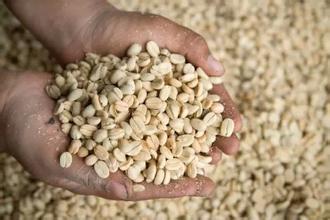
Falling coffee prices and rising demand for coffee beans may improve the quality of the products.
Mingtai, a commodity research institute, believes that due to global warming, the global coffee supply is decreasing, Brazil is the world's largest coffee producer, and coffee prices in Arabica have fallen by 35% in the past year. The demand for a cup of high-quality coffee is on the rise, and the supply of high-quality coffee may not keep pace with the demand for the next three to five years. Cafes all over the UK, fine production and high quality coffee

Boutique coffee beans from Ethiopia in Africa unique flavor of Ethiopian boutique coffee
The species of Geisha was discovered in the Rose Summer Forest of Ethiopia in 1931 and sent to the Coffee Institute in Kenya; it was introduced to Uganda and Tanzania in 1936, in Costa Rica in 1953, and Panama was introduced in the 1970s by Francesca of Dongba Seven Farm Garden. Mr. Serraxin got the seeds from CATIE in Costa Rica and started growing Rosa Coffee because
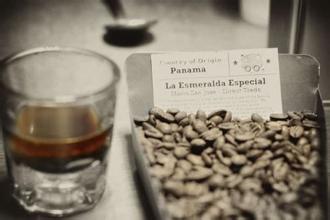
The latest introduction of boutique Coffee Rosa Coffee
The species of Geisha was discovered in the Rose Summer Forest of Ethiopia in 1931 and sent to the Coffee Institute in Kenya; it was introduced to Uganda and Tanzania in 1936, in Costa Rica in 1953, and Panama was introduced in the 1970s by Francesca of Dongba Seven Farm Garden. Mr. Serraxin got the seeds from CATIE in Costa Rica and started growing Rosa Coffee because

Cliff Manor Coffee Manor in Jamaica introduces Blue Mountain Coffee Flavor
As early as the mid-18th century (around 1750), Clifton Farm began to grow and produce coffee. According to a survey conducted by the Jamaica Institute in 1810, Robert Hamilton was the owner of the farm at that time. This map shows that Clifton Mountain is divided into two parts: 427 mu of pasture with 80 mu of coffee at the top, 111 mu of coffee and 264 mu of grazing at the foot of the mountain.

The unique floral flavor of boutique coffee beans from Geisha, an Ethiopian region in Africa
The species of Geisha was discovered in the Rose Summer Forest of Ethiopia in 1931 and sent to the Coffee Institute in Kenya; it was introduced to Uganda and Tanzania in 1936, in Costa Rica in 1953, and Panama was introduced in the 1970s by Francesca of Dongba Seven Farm Garden. Mr. Serraxin got the seeds from CATIE in Costa Rica and started growing Rosa Coffee because